In the contemporary ASEAN hospitality landscape, managing guest communication has rapidly evolved into a critical operational bottleneck. Specifically, whereas traditional hoteliers grapple with fragmented data silos and delayed replies, innovative leaders are discovering that manual messaging creates severe structural volatility. Consequently, as traveler demands shift toward immediate responses, operators must look beyond surface-level fixes to survive. Furthermore, by migrating from basic consumer tools to robust, automated architectures, properties can eliminate administrative friction and reclaim valuable operating capacity. Moreover, to understand how smart properties overcome widespread WhatsApp overload, executives must analyze the fundamental chasm between consumer apps and enterprise infrastructure.
The Architectural Divide: WhatsApp Business App vs. WhatsApp API
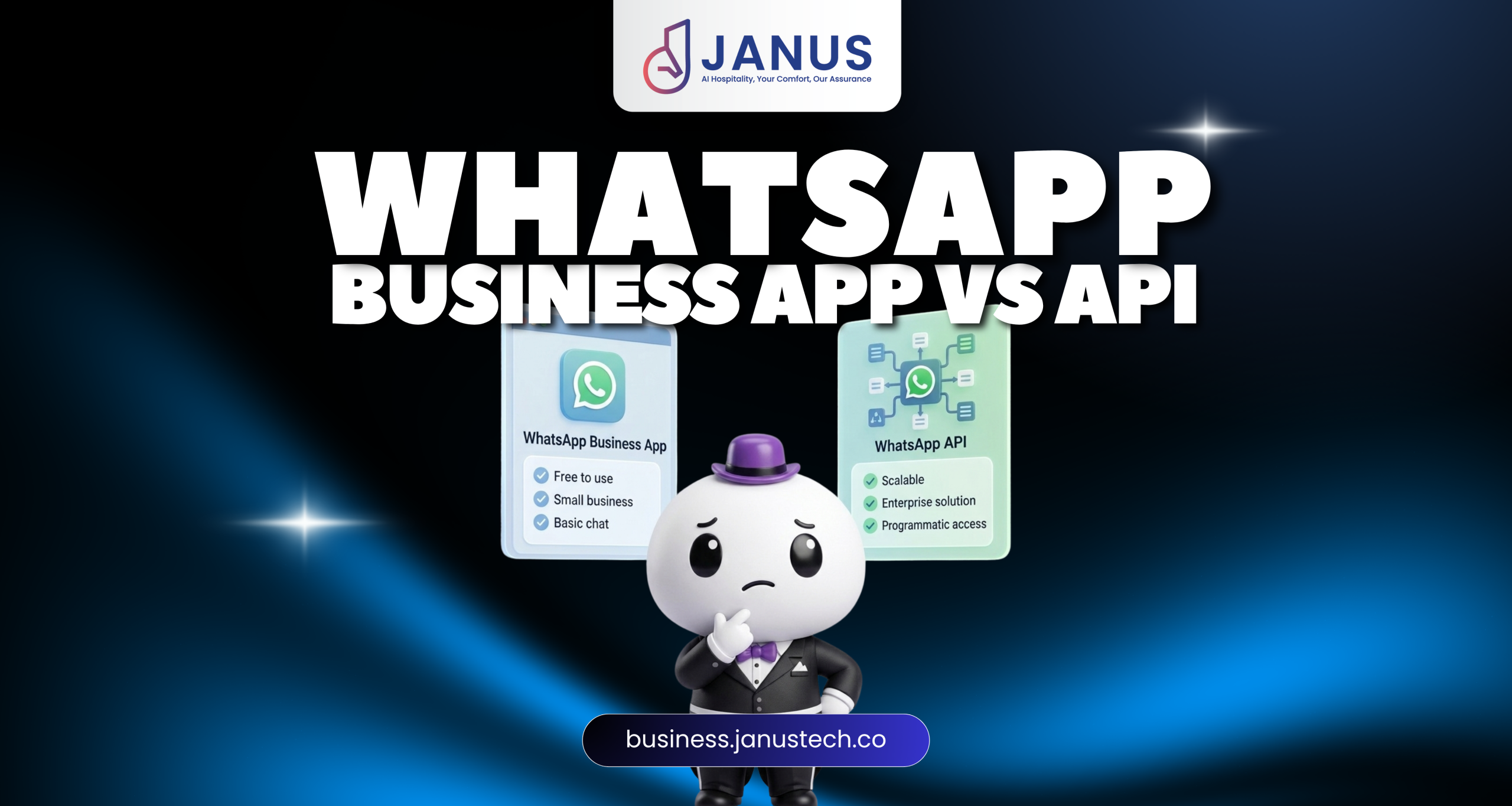
To understand why traditional operations fail, hoteliers must first examine the fundamental chasm between the standard WhatsApp Business App and the enterprise-grade WhatsApp API.
WhatsApp Business App
Specifically built for micro-enterprises and single-user storefronts, this mobile-dependent application suffers from severe scalability bottlenecks.
Furthermore, it lacks multi-agent routing, deep Property Management System (PMS) integrations, and reliable webhook connectivity.
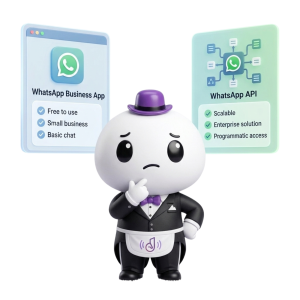
WhatsApp API (WhatsApp Business Platform)
In contrast, the official API is engineered for high-volume, automated guest engagement. Consequently, it supports multi-agent dashboards, seamless cloud hosting, and robust API triggers for automated check-ins and booking confirmations.
Meta Algorithm Restrictions and the 24-Hour Open Window Rule
Recently, Meta’s algorithm has intensified restrictions on standard WhatsApp Business App usage, aggressively penalizing properties that attempt unauthorized bulk broadcasting or third-party grey-market automation wrappers. Specifically, accounts using the consumer app for automated mass outreach face sudden bans and delivery failures.
Furthermore, operators must master the 24-hour open window message rule. Once a guest initiates a conversation, hoteliers have a 24-hour customer service window to reply freely without template fees. However, sending scheduled messages or automated outreach outside this window requires pre-approved Meta message templates, which incur conversation-based charges.
Additionally, even within the 24-hour window, poorly structured scheduled messages or spam-like broadcasts can trigger user blocks and algorithmic suppression.
Deploying the PAXISS Framework for Sustainable Growth
To resolve these operational friction points, Janus—the leading ASEAN AI hospitality bot built specifically for human-less-operation hoteliers—introduces a transformative commercial methodology. Specifically, this system operates through the Superhost AI framework, a humanized six-step systematic digitization approach designed to tackle technophobia and lack of digitization know-how.
Moreover, executing this operational transformation successfully requires following a disciplined, structured path:
- Pinpoint Chaos: Map manual processes like spreadsheet tracking, delayed replies, and repeated guest questions.
- Assign One Goal: Establish a single source of truth and achieve a clear operational win within 90 days.
- X-Automate: Automate routine tasks such as booking confirmations and pre-arrival messages while maintaining operational integrity.
- Internal Cleanup: Consolidate guest data into a unified database to eliminate fragmented records.
- Specialist Hand-off: Keep human specialists in control of complex problem-solving, service recovery, and high-value guest experiences.
- Success Review: Conduct weekly audits of performance metrics to refine the system continuously.
Ultimately, through disciplined architectural upgrades and systematic automation, forward-thinking hoteliers can achieve category leadership and drive sustainable profitability.